
Phil Bell: Voltify Seeks to Build “Tesla of Rail”
April 18, 2026
By Phil Bell
Let me be clear: I love diesel-electric locomotives. After all, how cool is it to hear the sound of the diesel engine, the whine of the turbocharger, and the rumble of the ground when a train goes by. As a 45 year-old born in the early 1980s, I never saw steam locomotives operating on a regular revenue basis, and as something of a technological luddite, it is hard for me to understand why the rail industry would contemplate giving up on a well-known form of locomotion.
But remember those steam locomotives that I didn’t see in action? Well, they were once a core part of the American landscape. Anyone who visits a working steam shop (and yes, there are more than a few thanks to a number of preservationists, along with the Union Pacific Railroad and its famous Big Boy) will marvel at what it took to keep those machines able to move freight and passengers on a daily basis.
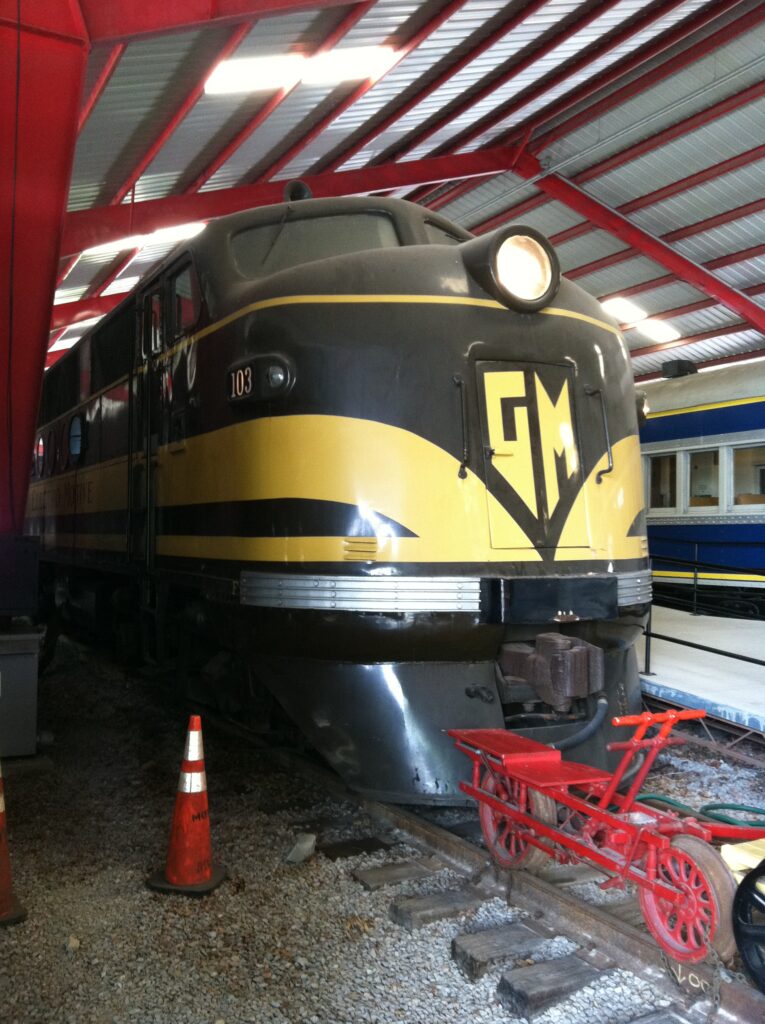
Yet it was a set of diminutive diesel-electric locomotives built by the Electro-Motive Corporation (by the a part of General Motors) which changed it all. This four-unit set of freight locomotives looked nothing like the large–and growing–steam engines that criss-crossed North America each day. They most certainly did not have the same power (after all, it took four of them in order to reach the same power level as some larger steamers). Oh, and they posed an existential threat to some who worked on the railroad (just think: jobs like firelighters–who built the all-important fires that heated water to make steam–and the railroad fireman who not only kept the fire going but monitored every facet of the engine’s operation…like Scotty on the Starship Enterprise), and others who shipped important cargo such as coal.
Despite all of this, that four-unit set of locomotives, called the “FT” kept traveling across the Nation, convincing railroad after railroad that the combination of diesel power and electric traction could do what steam locomotives could not: improve the railroad’s ability to move trains at a lower cost. For an industry that was once the Nation’s technological leader, but had been hobbled by excessive regulation, and a destructive period of government management during World War I, this was an advancement which could not be ignored.
The result? The diesel-electric locomotive has reigned supreme on America’s railroads since the 1950s and that dominance isn’t about to end anytime soon, even with the persistent regulatory harassment of the technology by environmental leaders within both political parties.
However, the Israeli duo of Dafna Langer (Chief Executive Officer) and Alon Kessel (Chief Technology Officer) have established Voltify to change that. The startup recently raised $30 million in seed capital to embark on this mission. Just as the FT sought to lower costs and improve the ability to move trains, Voltify proposes to reduce energy costs while lowering emissions. The company has boldly stated that it seeks to become the “Tesla of Rail,” creating high expectations for what will be a very difficult job.
While a company with $30 million in hand does not yet appear to be a threat to the diesel-electric locomotive, one should not count them out. After all, the manufacturer of the FT started out by coordinating the construction of so-called “doodlebug” railcars, which operated on some of the lowest-revenue branch lines that railroads of the 1920s and 1930s had to serve. History shows that the big builders of the day, such as Baldwin Locomotive Works and the American Locomotive Company did not take them–or the diesel-electric–seriously until it was much too late. Innovation won and not only did the steam locomotive find itself relegated to tourist service, but those legendary builders were gone from the scene, too.
Will Voltify turn the same trick as the Electro-Motive Corporation? Only time will tell, but as long as America embraces a pro-innovation culture, we need never worry about being stuck with a specific way of doing things…no matter how much that change might sometimes break my heart.
-Phil Bell
Phil Bell is Deputy Director of the Center for Transportation Advancement, the founder of Tower K Group, and host of The All Aboard Podcast by All Things Trains.
________________________________________________________________________________________________
Electro-Motive Corporation FTA #103A, the first of over 1,000 FT-series units produced. The locomotive now resides at the Museum of Transportation in Kirkwood, MO. Photo Credit: Phil Bell